Monitor
Platform-wide visibilityHealth, logs, performance and product context become structured evidence.
Continuous assurance. Governed change. Clear evidence.
Ledger combines connected business products with a platform that discovers services, validates behaviour and turns operational signals into evidence for safer, human-approved change.

Integrated AI engineering
Ledger's AI works with the framework's architecture, runtime evidence, assurance and release controls. It helps teams move faster while permissions, tests and people remain in control.
Turn a business need into a focused, traceable product change.
AI reads the framework rules, product boundaries and current system evidence.
Generate and extend services using shared runtime, security, messaging and audit capabilities.
Run builds, contracts, behaviours and regression checks with retained evidence.
People inspect impact, risk and test results before material change proceeds.
Deploy through a controlled path, then feed health, logs and outcomes back into the next decision.
The Ledger difference
Traditional software slowly becomes tomorrow’s refresh project. Ledger is being engineered to continuously collect operational evidence, identify improvement opportunities and turn them into governed, testable updates.
Health, logs, performance and product context become structured evidence.
AI correlates signals with the framework, product boundaries and current work.
Recommendations become traceable work items with impact and risk context.
Builds, tests and protected checks provide evidence before release.
Approved changes move through a controlled, auditable deployment path.
Ledger Assurance
Ledger Assurance discovers services, plans safe checks, coordinates isolated workers and turns every result into traceable evidence. It provides independent assurance beyond developer-written unit tests without giving AI permission to change production code.
Registered services advertise health, OpenAPI, dependencies and test capabilities. Ledger creates an initial assurance profile and can trigger a deterministic first run.
Bounded OpenAPI checks validate safe read-only endpoints and response contracts. Readable behaviour packs exercise reusable business workflows.
Every run retains target, version, commit, environment, tenant and correlation context alongside hashed response evidence and detailed outcomes.
Historical contract baselines identify removed operations, newly required inputs, lost success responses and unexpected authentication changes.
Tenant-scoped worker leases, temporary-environment tracking and durable cleanup protect test data. Production is restricted to approved read-only activity.
The Control Center reports scores, category rates, queued work and recent runs, with drill-down from a failure to its supporting evidence.
Products
Start with the capability you need, then connect the workflow as the business grows. Ledger Assurance provides continuous testing and evidence across the product portfolio, alongside the current business products and platform control center.
Continuously discover services, run scheduled and release-triggered checks, retain traceable evidence and detect regressions through one governed assurance product.
Create, preview and email invoices, record full or partial payments, manage customers and produce account summaries from one focused workspace.
Manage organisations, contacts, opportunities, activities, tags and consent, with a direct route from a won opportunity into invoicing.
Build WhatsApp and email journeys with groups, tags, configurable steps, delays, consent controls and auditable delivery activity.
Capture and learn distributed message flows, simulate operational change and validate behaviour before it reaches a live environment.
Operate services, runtime configuration, identity, health, releases and governed automation through a shared control plane.
Inside the products
PulseSim is a Ledger product for learning and rehearsing distributed system behaviour. It demonstrates how product services reuse the framework’s runtime, security, audit, realtime and automation capabilities.
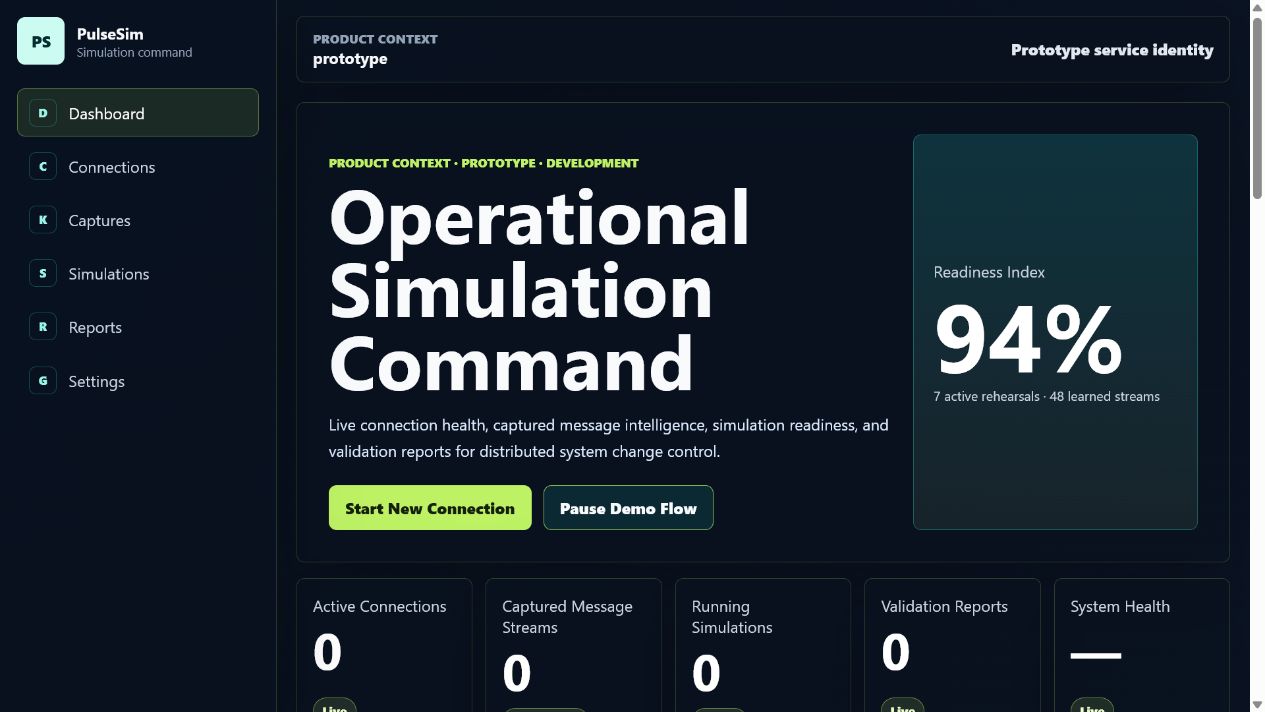
A live operational view of connection health, learned streams, running simulations, validation reports and system readiness.
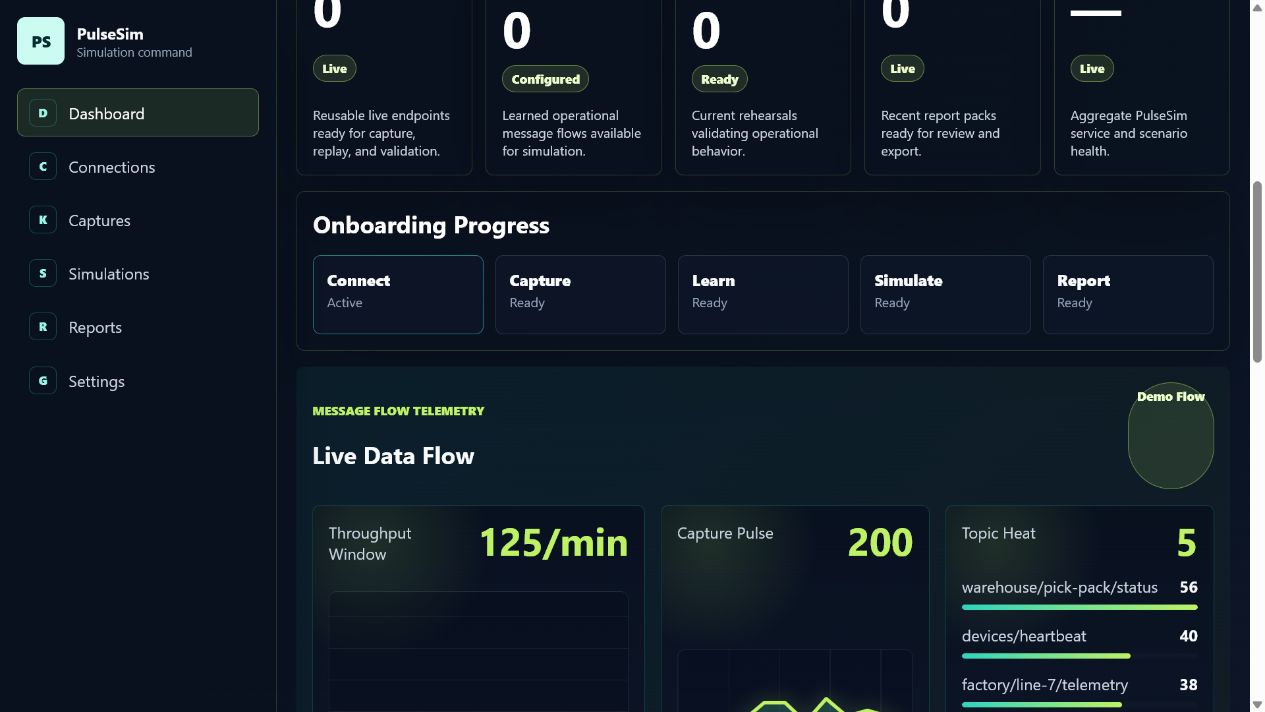
Message throughput, capture pulse, topic heat and live payload evidence provide the signals used to understand behaviour before change.
Platform
Ledger separates the reusable platform from its business products. That reduces repeated engineering while preserving independent services, explicit data ownership and operational visibility.
Configuration, registry, feature flags, health, messaging, audit and realtime capabilities are built once and reused by every product.
Each business service remains independently deployable and owns its operational data while integrating through stable contracts and events.
Containerised .NET services, health checks and environment-based configuration provide a clear path from the current prototype into managed cloud hosting.
Governed automation
The AI engineering system is more than a chatbot attached to a product. It connects monitoring, work governance, source control, protected validation and two-phase release into one auditable improvement path.
Runtime signals and product context become evidence for a proposed improvement.
Work items, approval gates, provenance and protected validation keep a human accountable for material change.
Approved changes follow a reviewable Git and two-phase release path, with deployment remaining an explicit controlled action.
Customers & investors
Ledger starts with the operational spine many growing businesses already need: customers, revenue and communications. New products reuse the same platform rather than starting again.
Delivery
Adopt the product surface that solves today’s operational problem.
Share customer context across CRM, invoicing and consent-aware communications.
Add product services on the same contracts, runtime and operational controls.
Move container workloads to cloud hosting as usage, resilience and compliance needs mature.
Start
Talk to Ledger Signals about becoming a design partner, adopting a product or participating in the company’s next stage.